Dear Members of Provincial Parliament,
I am afraid that the province of Ontario is making a grievous mistake by denying Ontarian's the right to choose for consumption, the foods that are best for them and their families. The persecution of Michael Schmidt for distributing raw milk to educated consumers has the potential to send food policy in Ontario further down a slippery slope that benefits none but industrial food processors.
I would like to know why it is that I, or anyone else, can legally purchase tobacco products, alcohol, and a myriad of food products laced with high fructose corn syrup, all of which pose detrimental health risks, but cannot legally purchase raw milk from a clean, local operation. I'm not entirely sure how my interests as a consumer are being protected through the vilification of a small-scale local farmer whose products have yet to harm a single person.
Please do not provide me with a history of raw milk contamination statistics. The number of reported illnesses associated with the consumption of raw milk pale in comparison to the number of reported illnesses associated with the consumption of products that government food inspectors and food policies have deemed safe. In the past month alone, I have personally had to return both walnuts and tahini to my local grocery store, because they had possibly been contaminated with e. coli and salmonella.
Regulations and inspections are not solutions for a flawed food system that puts consumers at risk. Food safety policy does more to protect industry than it does to protect consumers. Who is liable when tainted meat from a government-approved processing facility harms, or even kills someone? Industry is absolved of responsibility because, after all, they passed their inspections. There's no real consequence and no incentive for companies to implement cleaner and safer practices. True food safety and security can only be attained through the promotion of transparent, local food sources.
As a representative of the electorate, it is your responsibility to protect the interests of the public, not the interests of the private, industrialized food sector. Canadians are capable of making smart decisions for themselves and their families. Please protect our freedom to do so.
Thank you sincerely for your time,
Chad Roberts
Showing posts with label politics. Show all posts
Showing posts with label politics. Show all posts
Tuesday, October 25, 2011


Food Freedom for All
Think you have the right to choose what foods you and your family consume? Not according to the Ontario Court of Justice, you don't.
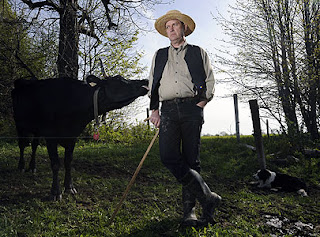


Michael Schmidt, an organic raw milk farmer, was recently convicted of 15 provincial offences related to the distribution of organic raw milk through a cowshare program at his Durham, Ontario farm. Because the commercial sale of raw milk is illegal in Canada, members of the program purchase shares in cows. It is not illegal to drink raw milk from your own cows. In 2010, the Ontario Court of Justice acquitted Mr. Schmidt of all the charges laid against him. The court's decision was appealed and in September 2011, the court found Mr. Schmidt guilty of 15 out of the 19 charges. In doing so, the Ontario Court of Justice has set a very dangerous precedent.
What's next? Will breast feeding mothers no longer be able to purchase breast pumps and store their breast milk? It's raw, after all. Will all organic produce and meat soon be illegal because it isn't subject to the sterilizing chlorine baths that conventional foods are subject to? Or will raw food be outlawed altogether? After all, large-scale industrial production of food results in numerous outbreaks of food-related illness every single year. And that's precisely why we have all of these food regulations - to protect consumers from the health risks that arose as a result of centralizing and industrializing food production. Before Big Food there was little to no risk associated with the foods we ate. Farmer Schmidt is being persecuted by laws that were meant to protect consumers from food production practices that are the polar opposite of the practices employed on his farm.
There's a lot of debate going on about the health benefits of raw milk in comparison to the risks. I'm inclined to believe that the benefits far outweigh the risks, especially considering that not one person has become ill from consuming the milk distributed by Mr. Schmidt, or by larger raw milk producers in the U.S. According to the Campaign for Real Milk: Pasteurization destroys enzymes, diminishes vitamin content, denatures fragile milk proteins, destroys vitamins C, B12 and B6, kills beneficial bacteria, promotes pathogens and is associated with allergies, increased tooth decay, colic in infants, growth problems in children, osteoporosis, arthritis, heart disease, and cancer.
Whichever side of the benefits vs. risks debate you're on, however, isn't really relevant. Very few of us would argue that tobacco, alcohol, or high fructose corn syrup are good for us. In fact, these three legal substances cause much more sickness and death than has ever been attributed to the consumption of raw milk. But we're free to consume them, if we so choose. So what's the difference between these substances, which have been proven to cause numerous health problems, and raw milk, which has been successfully administered therapeutically to combat such ailments as asthma and allergies, rheumatoid arthritis, and multiple sclerosis? Well, for starters, tobacco, alcohol, and high fructose corn syrup are all members of the Big Business Club. So is conventional milk, for that matter. It should come as no surprise that food regulations, more often than not, support Big Food and undermine small-scale, local production. Big Food has the power and money to lobby the government and push out alternatives that they perceive as a threat. Local food is one of those alternatives.
We can all stand up for our right to consume the foods that we deem best for ourselves and our families. Michael Schmidt is currently on his 25th day of a hunger strike, awaiting the opportunity to sit down with Dalton McGuinty and plead his case. Support Mr. Schmidt's fight to protect or food freedom by joining the Support Michael Schmidt! Facebook group. Go a bit further and write a letter to your MP, MPP, the Minister of Health and Long-Term Care, the Minister of Agriculture, Food and Rural Affairs, and Premier McGuinty himself. Remind our government officials that Canada is the only G8 country to outlaw raw milk, and that the freedom to choose the foods we consume is more important than policies that serve only to protect the interests of Big Food.
You can keep up with Michael Schmidt's battle for our food freedom here.
You can keep up with Michael Schmidt's battle for our food freedom here.
Thursday, October 20, 2011
I Believe in Yesterday

People think I'm nuts. I think life today is nuts.
Did you know that the average house in 1950 cost $7500 ($70 000 today) and the average annual household income was $4200 ($40 000 today)? Today the average household income is just under $70 000 and the average cost of a house is over $350 000. Most families in 1950 had one income and most families today have two incomes, so a house in 1950 cost one person less than 2 year's pay, and a house today costs two people more than 5 year's pay.
Does that make sense? Is that progress?
You'd think that with all the technological advances in the past 60 years that, if anything, it would cost less to buy a home, not more. Isn't that the point in progress - to make life better, and therefore more affordable? Not much is cheaper today than it was 60 years ago, though, and it can be argued persuasively that the few things that are cheaper, shouldn't be. Energy is cheaper. Meat is cheaper. Grains are cheaper. Now, I'm not saying that we don't need energy, meat, or grains. Quite the contrary. We just don't need as much of them as we have. Overproduction and over-consumption of all three are destroying our bodies and the planet.
That average household from 1950 managed to put away about $420 a year in savings - might not seem like much, but it was 10% of the household's annual income. Not very many families today can afford to put away 10% of their income.
 |
| A modern "farm" |
Sure, life was tough before 1950. People worked harder for less, but I would argue that they were better people for it. I doubt a child today learns more from watching television or playing video games than a child before 1950 learned from doing farm and household chores. I would even go so far as to say that a child today learns much less. Imagine how much a child must have learned about the real world by assisting in the production of food, whether it be on a farm, in a kitchen, or in a kitchen garden. Without television and video games, children had to be creative in the ways that they entertained themselves, and therefore, were forced to better develop their imaginations and critical thinking skills.
I doubt anyone will argue with me when I say that we are much more disengaged today than we were before 1950. Voter turnout is proof of that. Some will say that politicians are worse today than they were before 1950 and that's the reason so few of us vote. I would say that politicians are worse today because so few of us vote. We can't expect to be properly represented by a government that we don't vote for. Political parties are in the business of winning elections. Most parties pander to the concerns of older electors, because older electors actually bother to vote. If young people started voting, the parties would start pandering to them, too.

A new growth index was released in Canada today. It's called the Canadian Index of Wellbeing (CIW), and it's supposed to be a better indicator of the quality of life enjoyed by Canadians than the GDP, which is based solely on the economy. The CIW measures numerous indicators of wellbeing, including democratic engagement, community vitality, education, environment, health, leisure and culture, living standards, and time use. According to the CIW, Canada's GDP has grown 31% since 1994, but our standard of living has only grown by 11% in the same period of time. What this means is that the benefits of economic growth are not being enjoyed by the average Canadian.
While there are fewer of us unemployed than there were in 1994, job security has decreased, and the cost of living has grown.
Our life expectancy has gone up a little, but we now suffer from more health problems and live fewer years of our lives in good health. I'd rather die at 70 and enjoy every one of those years, than die at 80 and only be healthy enough to enjoy 60 of them, wouldn't you?
We take more long-distance trips today than we did in 1994, but visits to our National Parks and Historic Sites are down by over 20%.
We spend more on cultural and recreational activities, but spend less time enjoying these activities.
We volunteer less, but watch television and play video games more.
We spend more time in educational institutions, but are somehow less educated, and less capable of finding jobs relevant to our degrees than the generations before us.
Our greenhouse gas emissions have gone up 15%, the health of our fisheries has declined by over 5%, and there is over 3% more smog in our cities. Even worse, our grade on the Canadian Living Planet Index has decreased by nearly 24%. Of the 130 countries measured, we ranked as having the 7th largest ecological footprint (per capita). If every person on Earth was to live like the average Canadian lives, we would need 4 planets just to maintain life as it is for us today.

The CIW Network is an independent, non-partisan group based out of the University of Waterloo. The data they've collected and compiled is from reliable sources, including the Government of Canada (I refuse to call it the Harper Government of Canada, no matter how much our PM insists).
It's kinda nice when my ideas are supported by statistics.
Still think I'm nuts?
Sunday, October 16, 2011
Call Me the Taxman
I love taxes. I really do. Obviously, I would also love to have a bit of extra money in my bank account - wouldn't we all - but I would much rather help fund health care, education, and all the other tax-dependent services that make Canada one of the best countries in the world to live in.

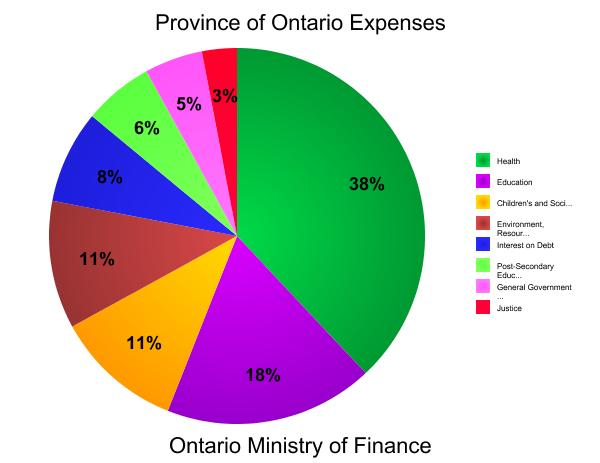
I'm frequently surprised, more so during elections, at just how many Canadians jump on the anti-tax bandwagon with no real idea of how lower taxes will impact themselves and society as a whole. You can't just lower taxes and expect to receive the same level of service you received when paying higher taxes. But we don't want the same level of service, do we? No, we want more and better service, and all for a cheaper price. We want shorter wait times at hospitals and more family doctors, smaller class sizes and full-day kindergarten, better roads, more long-term care spaces for the elderly, better environmental stewardship, the list goes on and on. The problem is you can't get more for less, without sacrificing quality.
Here's how our federal tax dollars were spent in 2010:

And our provincial tax dollars:
Both federally and provincially, income taxes are the biggest contributor to the tax base, followed by sales and corporate taxes.
One can argue that if taxes were spent more efficiently we could afford to lower them. As Rob Ford, the mayor of Toronto has wonderfully demonstrated, this "gravy" is very much non-existent. If Toronto, the wealthiest city in Ontario, can't cut spending without cutting services like libraries and police, it's doubtful than many other municipalities, if any at all, can find this so-called "gravy," either.
Statistics show that the George W. Bush era of tax cuts in the Untied States has contributed more to the country's debt than the economic downturn, recovery measures (bailouts and economic stimulus), and the war for oil (oops...I mean on terrorism). The fact that economists denounce the reduction of the GST in Canada (which voters support), and support the HST (which voters denounce) is truly worrisome and indicative that Canadians' attitudes toward taxes are beginning to mirror those of our neighbours to the south.
 |
| Center on Budget and Policy Priorities, based on estimates from Congressional Budget Office |
Taxes are an investment in our future - in our children's and grandchildren's futures. Yet taxes have been continuously reduced in Canada for the past decade, while our provincial and federal deficits and debts soar. Health expenditures, as seen above, require the most funding from the tax base, and their share of the pie is only going to grow. Our society is aging, and our youth are experiencing more health problems now than they have in the past century. As health care costs consume more and more of our taxes, are we going to be willing to cut spending on education, justice, social programs, national security and sovereignty, and other essential services to keep up? I doubt it, but without a healthier tax base, that's precisely what will happen.
We need a better tax system. Corporations and the wealthy need to pay more. Carbon taxes should replace a good portion of income taxes. The GST needs to be returned to an appropriate level. The reduction of the GST (which reduces government revenue by over $13 billion a year) was nothing more than a bribe - one of Harper's many ways of buying votes. Any politician with half a brain knows that reducing sales taxes is not good economic policy. It's not only insulting, but it's downright deplorable that the Prime Minister of our country misleads Canadians and promotes political and economic ignorance by promoting flawed policies simply to improve his chances at election. Ask yourself this: who does sales tax reduction really help? It doesn't do much to help the average Canadian who can't afford to go shopping at the mall every week. A 2% reduction in sales tax does, however, mean a lot to an already under-income-taxed wealthy Canadian who can afford a $1000 pair of shoes and a $100 000 luxury sedan. Reductions in corporate and sales taxes help the rich more than the poor. Period.
 |
| Best Buds |
Income disparity (the gap between the rich and the poor) is now growing more quickly in Canada than in the United States. While the average Canadian is very lucky to enjoy a better standard of living than the average American, as our social and economic policies continue to mimic American policies, our standard of living is quickly joining the Americans' in a race to the bottom.
According to Alex Himelfarb, Director of the Glendon School of Public and International Affairs, at York University, former Clerk of the Privy Council and Secretary to the Cabinet, "It is time to make some hard choices about the Canada we want, about what services we see as essential, about how much inequality we are prepared to tolerate, about our willingness to take back the future."
Wednesday, October 5, 2011
McGuinty - The Best Choice for Ontario

Tomorrow is election day in Ontario. It's been a pretty boring election campaign, but that shouldn't lead anyone to believe that this isn't an important election. Ontario is at a crossroads. Will we mirror the federal election and reward a Conservative for running a hateful campaign, full of fear mongering and lies, or will we follow in the steps of our fellow provinces and elect a progressive party to counterbalance the Conservative ideology that is running rampant in Ottawa?
I'm no Liberal - let me make that clear. I'm a card-carrying member of the Green Party, and as much as it pains me to admit it, voting for the party that I love and believe in whole-heartedly just doesn't make sense in an election as close as this one is expected to be. So I am throwing my support behind the party in my riding that has the best chance of beating the Conservative candidate.
Ontario cannot afford a Conservative government. No, I'm not talking about taxes. I'm talking about something more important than that - our entire way of life. I don't want our health care system to be run by a party that fired 6000 nurses and closed 28 hospitals the last time they were in power. I don't want our education system to be run by a man who believes kids should be learning their ABCs and how to tie their shoes in the first grade - children should know their ABCs before the first grade, and it's up to parents, not teachers, to teach children how to tie their shoes. I don't want our economy to be run by a man that promises to tear up a contract that commits a foreign company to investing $7 billion in Ontario in exchange for $4 million a year. I don't want the future of public transit to be in the hands of a party that believes creating more roads is the answer to traffic congestion. And I most definitely don't want our renewable energy sector dismantled by a party that still refuses to acknowledge climate change as a real issue.

Believe it or not, Ontario has bounced back from the recession more successfully than the rest of Canada. We've recouped each job lost during the recession, and so far this year Ontario created more full-time jobs than the rest of the country combined. Forbes named Canada the best country in the world to do business in, and credited the Ontario Liberals for the country's leap from 4th place to 1st in their ratings. Note the picture of solar panel production accompanying this article. After California, we're the second most popular region for foreign investment in North America. Imagine how that reputation would be damaged if Hudak was given the opportunity to tear up the $7 billion Samsung contract.
 |
| McGuinty - the "Education Premier" |
The Liberal Party has transformed Ontario's public education system into one that is the envy of the world. We now have 400 more schools (with another 150 on the way), 12 000 more teachers, 11 000 more support staff, and smaller class sizes. More students are graduating from high school - over 80% in 2009-2010, up from 60% in 2002-2003, the year before the Liberals took office. EQAO test scores have improved - 15% more third and sixth grade students now perform at or above the provincial standard in reading, writing, and mathematics than did in 2002-2003. The introduction of full-day kindergarten is especially beneficial to children with two working parents, as they no longer have to be shuffled between school and daycare. The Liberals have also given school boards more power to make their own decisions, allowing them to cater their services to local needs and address the issues that are most important to their students.

The Liberal Party of Ontario has a vision for the future. The Conservative Party of Ontario doesn't. Whether you agree with me or not, I implore you to vote tomorrow. After all, a true democracy requires democratic citizens.
Thursday, September 29, 2011
PMO Meddling in Ontario's Provincial Election
Two members of the PMO have made the news this week for interfering in the Ontario provincial election.
Stephen Harper's chief of staff, Nigel Wright, hosted a fundraiser for a Toronto PC candidate in his Toronto home. Oddly enough, it was Wright who authored the memo from the PMO urging members of the Conservative caucus to avoid "becoming the story" in the 4 provincial elections that are underway this fall.
Dean Del Mastro, Harper's parliamentary secretary, actually commissioned a poll in his Peterborough riding. While Del Mastro claims that his poll wasn't conducted with any intention of affecting the election in his riding, it's pretty hard to believe that a politician isn't aware of the impact that polls can have on the voting process. The two questions posed in Del Mastro's poll were undeniably partisan:
“Given that jurisdictions like the United States and Europe have invested billions of dollars trying to create green jobs with disappointing results, do you believe that the $7 billion Samsung deal will create 16,000 jobs in Ontario?”
“Given that families and seniors are struggling today in Ontario, do you support eliminating HST from energy bills as well as income-splitting for families to reduce their provincial tax burden?”
In addition to his poll, Del Mastro has appeared at numerous functions in support of Peterborough's Conservative candidate. He has also attacked the Liberal Party of Ontario's platform on his Facebook and Twitter pages.
Clearly, the PMO doesn't practice what it preaches. Harper himself set the stage for these egregious interferences in political politics when he attended a barbecue hosted by Rob Ford in August. After applauding Rob Ford's "accomplishments" as mayor of Toronto, and patting himself on the back for cleaning up the "left-wing mess federally", Harper expressed his hope to "complete the hat trick" in the October 6 Ontario provincial election.
What really bothers me is that Harper didn't advise his caucus not to involve themselves in this fall's provincial elections. He basically told them to interfere all they wanted - just to be sneaky about it to avoid "becoming the story". So much for that, eh?
 |
| Nigel Wright |
Dean Del Mastro, Harper's parliamentary secretary, actually commissioned a poll in his Peterborough riding. While Del Mastro claims that his poll wasn't conducted with any intention of affecting the election in his riding, it's pretty hard to believe that a politician isn't aware of the impact that polls can have on the voting process. The two questions posed in Del Mastro's poll were undeniably partisan:
 |
| Dean Del Mastro |
“Given that families and seniors are struggling today in Ontario, do you support eliminating HST from energy bills as well as income-splitting for families to reduce their provincial tax burden?”
In addition to his poll, Del Mastro has appeared at numerous functions in support of Peterborough's Conservative candidate. He has also attacked the Liberal Party of Ontario's platform on his Facebook and Twitter pages.
 |
| Stephen Harper and Rob Ford on August 2, 2011 |
What really bothers me is that Harper didn't advise his caucus not to involve themselves in this fall's provincial elections. He basically told them to interfere all they wanted - just to be sneaky about it to avoid "becoming the story". So much for that, eh?
Parliament's Most Frequent Flyer Award Goes To...
 |
| Peter MacKay |
Since 2008, MacKay has cost taxpayers $2.9 million for his use of Challenger jets. He's used the jets more than our current and former Ministers of Foreign Affairs, and even uses the jets more than Jim Flaherty, our Minister of Finance, who has to travel around the globe pretty frequently to attend economic meetings.
MacKay's spokesperson defended MacKay's use of the military jets, stating that 50% of his flights were taken to attend to the returns of fallen soldiers. MacKay has used the jets on 35 occasions since 2008. Of those 35 occasions, 25 were for travel within Canada. Reports show that MacKay used the jets 9 times to attend to the repatriation of fallen soldiers. In my books, 9 out of 35 uses equals something more like 25% than the 50% that MacKay's spokesperson is claiming. Then again, Tories seem to practice a different form of mathematics than the rest of us.
 |
| A Challenger jet |
The rules, however, don't seem to apply to MacKay. He is also under fire for violating conflict of interest code for a vacation he took in the summer of 2010 to the Burnt Rattle Fishing Camp. MacKay refused to disclose the identity of the camp's owner, but it later surfaced that the camp is owned by Rob Crosbie, chairman of Marine Atlantic, a Crown corporation. The cherry on the cake - MacKay commissioned a Cormorant search-and-rescue helicopter to pick him up from the camp and deliver him to the Challenger jet he then used to return from his vacation.
Update: Harper himself has now defended MacKay in the House of Commons, citing the same erroneous statistics that MacKay's spokesperson cited. Using fallen soldiers to hide behind...pretty classy.
Wednesday, September 28, 2011
Stephen Harper - The Anti-Robin Hood
 |
| Tony Clement and Stephen Harper |
I've been hearing a lot from Conservative supporters that this $50 million isn't that big of a deal. After all, remember AdScam? I do. $3.75 million in misappropriated funds. Doesn't seem like that much money compared to $50 million. Harper rode the AdScam wave all the way to the PMO. Remember his cries for transparency and integrity in government? Where are they now? Paul Martin launched a full inquiry into the sponsorship scandal. I don't see Harper following suit and giving Canadians the transparency and honesty that they deserve, or that he promised.
"Oh, but every riding received stimulus money to help weather the recession." True. The average riding received between $15 and $20 million in stimulus funds. In addition to the $50 million in G8 funds, Parry Sound Muskoka received $42 million in stimulus funds, over twice the national average, for a grand total of $92 million in government funding in 2010 - over 4 times the national average.
"Oh, but every riding received stimulus money to help weather the recession." True. The average riding received between $15 and $20 million in stimulus funds. In addition to the $50 million in G8 funds, Parry Sound Muskoka received $42 million in stimulus funds, over twice the national average, for a grand total of $92 million in government funding in 2010 - over 4 times the national average.
Now, let's look at the amount of money that other cities have received in summit funding in the recent past. In 2002, Kananaskis, Alberta hosted a G8 summit. The city received about $5 million in funding. In 2001, Quebec City hosted the Summit of the Americas and received $4.5 million in funding. So why, then, did Parry Sound-Muskoka need $50 million? Plain and simple: it didn't. Parry Sound-Muskoka is a riding with a very healthy tax base. Cottages costing millions of dollars tend to contribute nicely in the form of property taxes.
 |
| Just a small part of Muskoka's "Millionaire's Row" |
The fact is: this $50 million could have been spent in a riding that truly needed the help. But Harper chose to take taxpayer's money and funnel it into a friend's riding that is already wealthier than most in Canada.
Harper's Economic Action Plan: Take from the poor - Give to the rich.
Harper's Economic Action Plan: Take from the poor - Give to the rich.
Subscribe to:
Posts (Atom)


